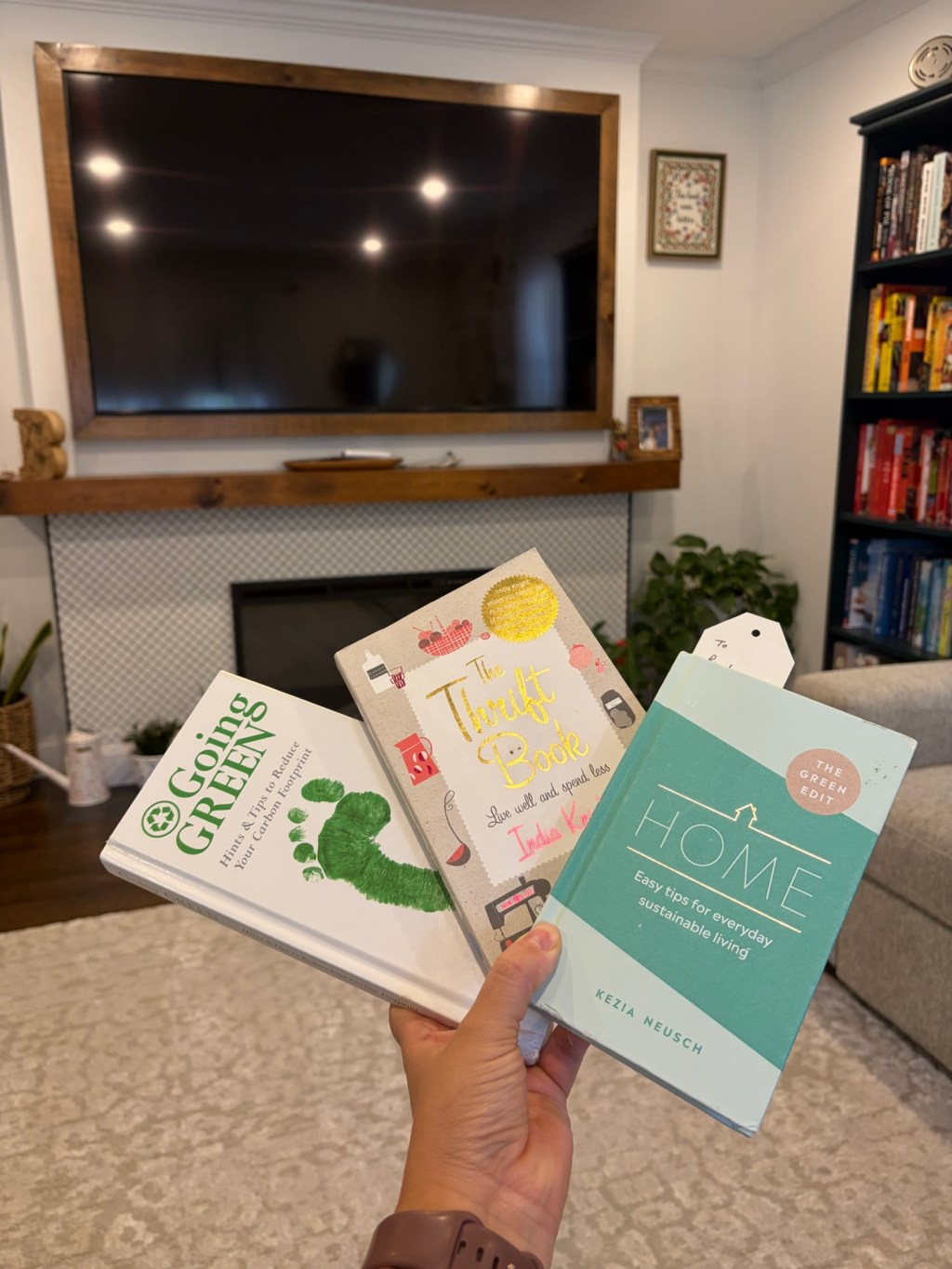
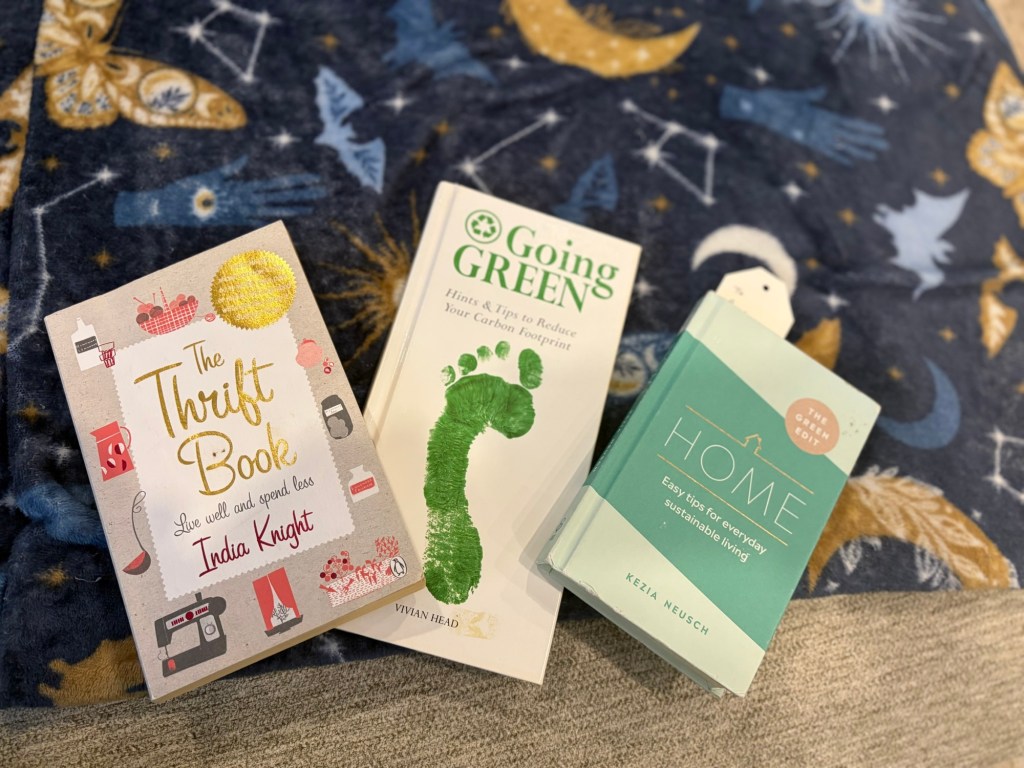
Over the past week and a half, I read three books about sustainable living, saving money, and making more thoughtful choices at home. Although each book approached the subject differently, they all reminded me that living a greener lifestyle does not have to mean changing everything overnight or spending a lot of money.
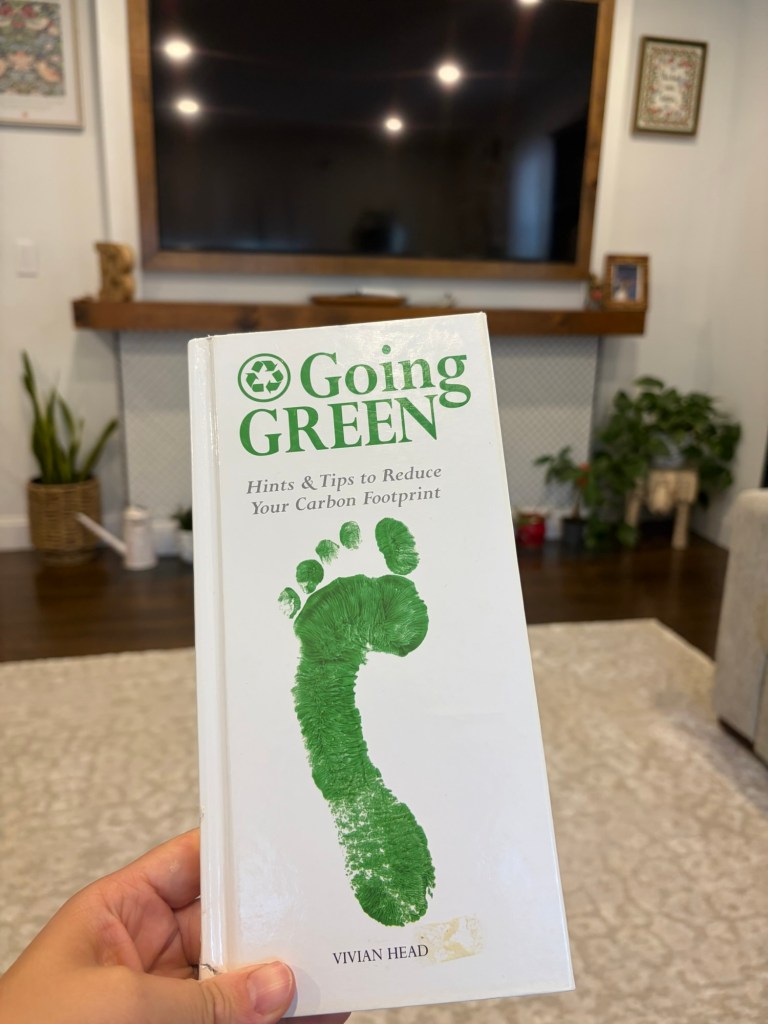
Going Green: Hints & Tips to Reduce Your Carbon Footprint by Vivian Head
Published in 2008, Going Green was the most factual and research-based of the three books. It explains the science behind climate change, how our everyday choices affect the environment, and the connection between our actions and the health of the planet.
I appreciated that the book did not simply tell readers what to change. It also explained why those changes matter. It breaks down our environmental impact and offers advice on how we can make better choices to help create a greener planet.
Because it contains more facts and scientific information, this book felt less personal than the other two. However, it was very informative and gave me a better understanding of the reasons behind many sustainable-living recommendations.
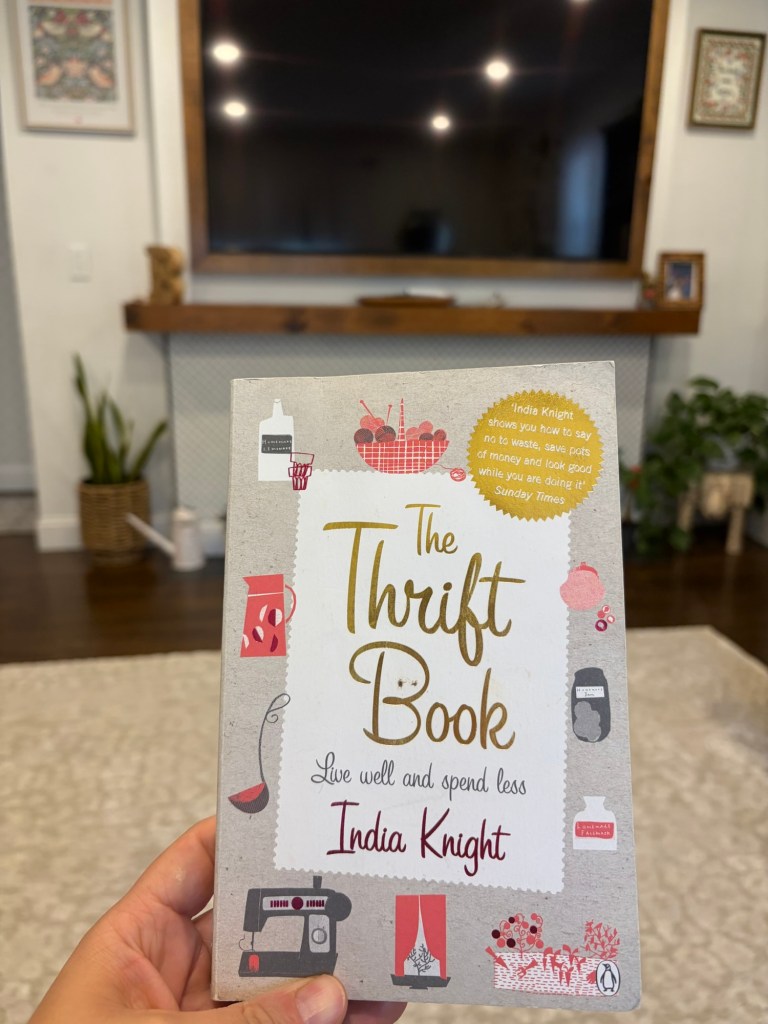
The Thrift Book: Live Well and Spend Less by India Knight
The Thrift Book, also originally published in 2008, was much more practical, conversational, and relatable. India Knight shares ideas for living well while spending less, reducing waste, and making the most of what you already have.
The book connects being thrifty and frugal with living a more eco-friendly lifestyle. This is something I strongly believe in because sustainability and budgeting can work together. Reusing what we have, cooking at home, wasting less, sharing with others, and shopping thoughtfully can help both our finances and the environment.
I especially enjoyed the recipes, crafts, and step-by-step ideas included throughout the book. The storytelling made it feel less like an instruction manual and more like receiving advice from someone who understands everyday life.
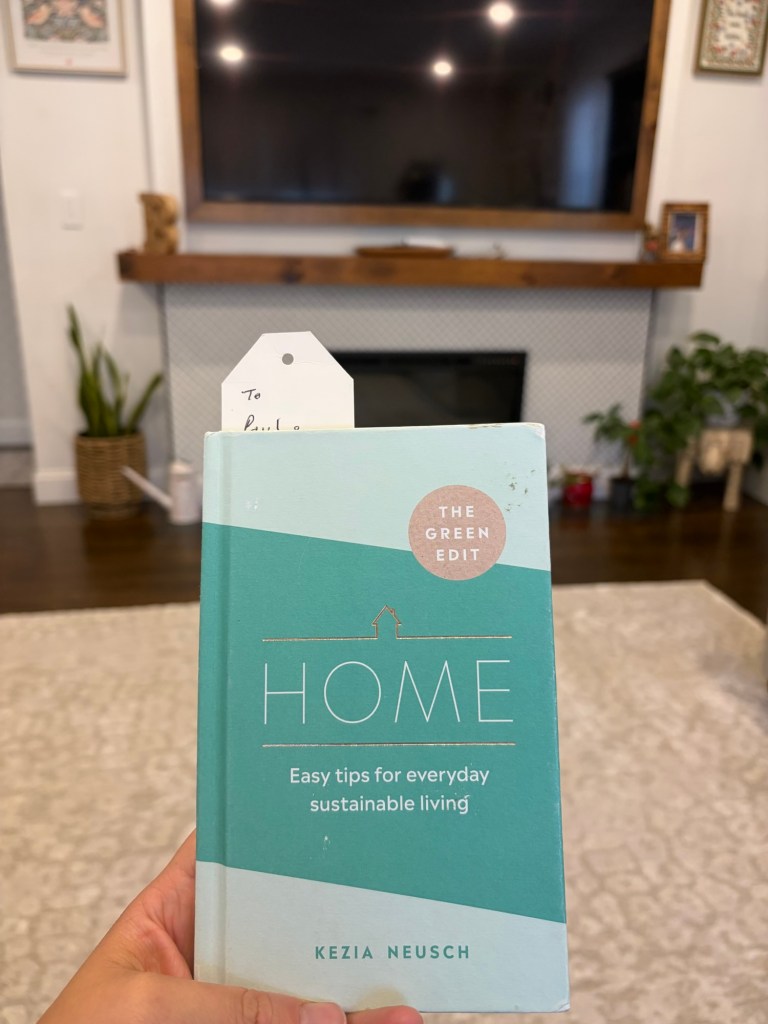
The Green Edit: Home—Easy Tips for Everyday Sustainable Living by Kezia Neusch
Published in 2020, The Green Edit: Home felt like a modern combination of the first two books. Kezia Neusch is a blogger and low-waste living expert, and her book covers many areas of everyday life—from the products we use in our homes to food, cleaning, shopping, waste, and simplifying our routines.
It includes practical tips, simple swaps, and a few recipes without making sustainable living feel overwhelming. To me, it feels like an updated and simplified version of The Thrift Book, while still including some of the environmental information found in Going Green.
Because the author is closer to my age and shares her ideas in a more modern and familiar way, this was the book I related to the most. However, I still believe all three books have something valuable to offer.
Can Older, UK-Based Advice Still Be Useful in America?
All three books are written from a UK perspective, and the first two are now nearly two decades old. Some brand names, prices, services, and specific recommendations may no longer apply. However, the main ideas are still very relevant.
Buying less, wasting less, repairing and reusing what we own, cooking at home, shopping secondhand, conserving energy, and being mindful of how we spend our money can be practiced almost anywhere. I live in America, but I found plenty of advice that I can apply to my own home and family.
Why I Chose Pre-Loved Books
I purchased all three books secondhand through Vinted, an online resale marketplace. I understand that shipping books is not completely without an environmental footprint, but I was specifically looking for books about these subjects and did not want to purchase them new.
For me, choosing pre-loved books was a way to use what is already available and give these copies another life instead of allowing them to go to waste or possibly end up in a landfill. When I am finished using them, I plan to pass them along to someone else so they can continue to be read and enjoyed.
That is one of my favorite parts of sustainable living: it does not have to be perfect. It is about making more thoughtful choices whenever we can, using what is already available, and allowing small changes to grow into better habits.
Overall, I enjoyed all three books. Going Green gave me the facts, The Thrift Book made frugal living feel practical and relatable, and The Green Edit: Home brought those ideas together in a simple, modern way. Together, they reminded me that sustainability is not only about protecting the planet—it can also help us save money, simplify our homes, reduce waste, and live more intentionally.
Free Resources and Alternatives
You can explore many of the same topics without purchasing these books:
● NASA: Climate Change Evidence
● United Nations: ActNow—Climate Action
● Project Drawdown: Climate Solutions
● Energy Star: Energy-Saving Tips
● EPA: Household Carbon Footprint Calculator
● Consumer.gov: Making a Budget
● Consumer Financial Protection Bureau: Budgeting
● USDA: Plan, Shop, Save, and Cook
● EPA: Reducing Wasted Food at Home
● EPA: Sustainable Management of Food
● EPA: Reducing, Reusing, and Recycling
● Energy Star: Home Improvement
● Consumer Reports: Sustainability
● Center for EcoTechnology: Waste Reduction
● EPA Safer Choice Product Search
● Environmental Working Group: Healthy Cleaning Guide
● Department of Energy: Energy Saver
● Federal Trade Commission: Consumer Advice
● National Park Service: Leave No Trace
You can also check your local public library for a free physical copy, e-book, or audiobook through services such as Libby and Hoopla.
 Jahzelle’s Creations
Leave a comment