
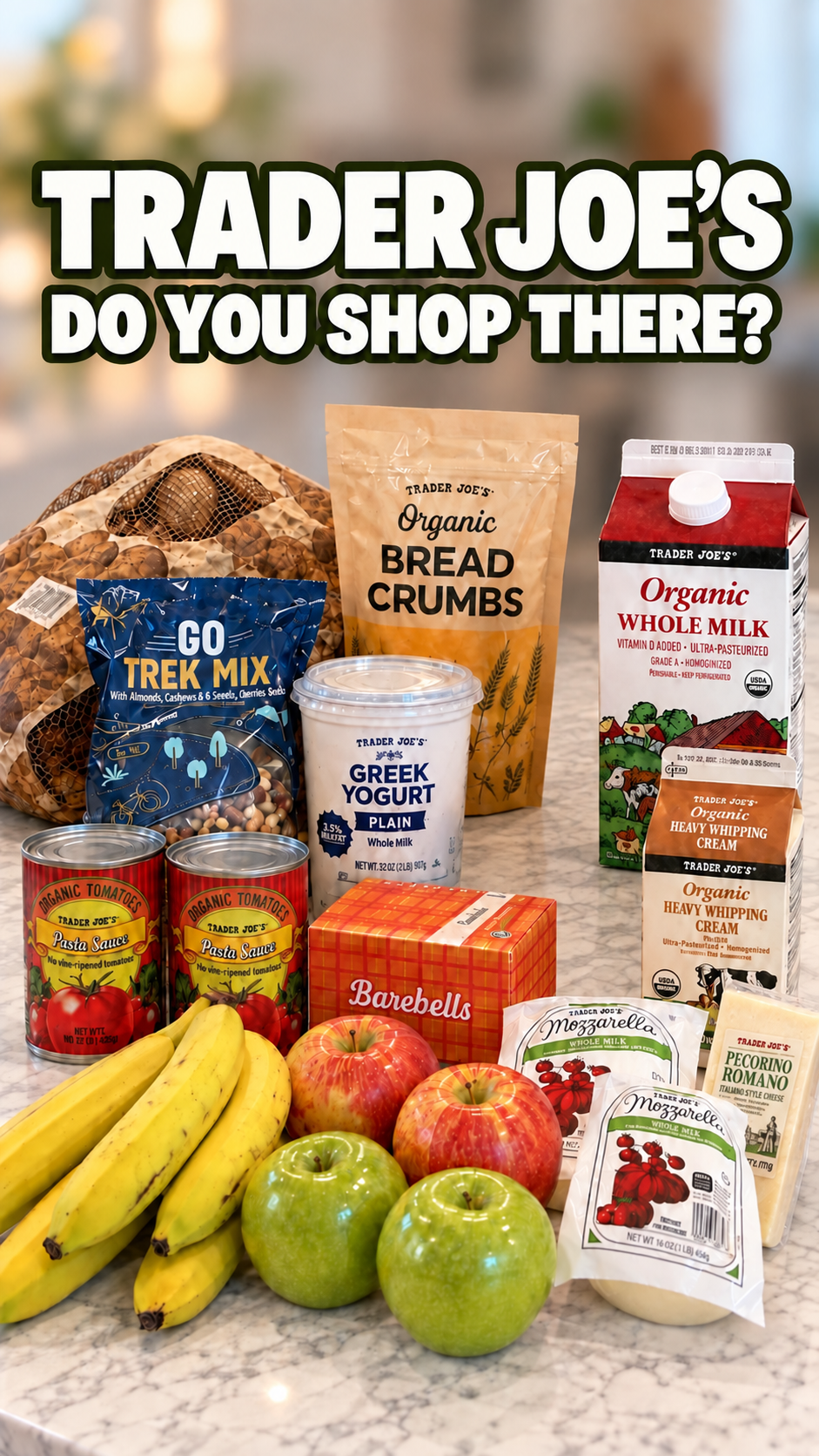
I have been shopping at Trader Joe’s for many years though not consistently, and there are definitely things I enjoy about it. The store is fun, the employees are usually friendly, and the rotating seasonal products make every visit feel a little different. Trader Joe’s is especially good at creating interesting, convenient foods and turning ordinary grocery shopping into an experience.
However, the longer I shop there—and the more intentional I become about budgeting and sustainability—the more I see Trader Joe’s as a specialty or novelty store rather than the best place to complete my family’s weekly grocery shopping.
What I Like About Trader Joe’s
Trader Joe’s carries plenty of reasonably priced products. Certain pantry staples, cheeses, frozen foods, sauces and specialty ingredients can be a good value. Its smaller selection can also make the store feel less overwhelming than a traditional supermarket.
The seasonal products are cute, creative and fun to try. Trader Joe’s is also a great place to discover ingredients and flavors that can make an ordinary meal feel more interesting.
Research has found that Trader Joe’s can be less expensive than the average supermarket, so it is not automatically an expensive place to shop. One grocery-price comparison found its prices were generally around 10–20% below the average of the stores surveyed. However, that does not necessarily mean it is the least expensive option for every family or every shopping list. (Consumers’ Checkbook)
Where Trader Joe’s Falls Short for Me
My biggest concern is how easy it is to walk into Trader Joe’s for a few groceries and leave with a cart full of seasonal snacks, prepared foods and limited-time products that were never on the shopping list.
Individually, many of these items may not seem expensive. But together, they can quickly raise the grocery bill without providing enough basic ingredients to create a full week of family meals. That is why I see Trader Joe’s as more of a “fun extras” store than a dependable budget supermarket—especially for a larger family.
I am also uncomfortable with the amount of packaging surrounding many of its products. Produce, snacks, frozen meals and prepared foods are frequently sold in bags, trays, wrappers or plastic containers. Trader Joe’s has taken steps to reduce unnecessary packaging and has previously reported removing millions of pounds of plastic, which deserves to be acknowledged. Still, shoppers trying to avoid single-use packaging may find it difficult to complete an entire low-waste grocery trip there.
Packaging can help protect food and prevent spoilage, so it is not always unnecessary. But from my perspective, Trader Joe’s still relies too heavily on individually packaged and convenience-oriented products.
How Does It Compare With Aldi and Whole Foods?
For a grocery budget, Aldi is usually the better alternative. Its limited-selection model, private-label products and simple stores help keep prices down. One comparison found Aldi’s prices were approximately 30–40% below the overall store average, although prices will always vary by location and shopping list. (Consumers’ Checkbook)
Aldi has also eliminated single-use plastic shopping bags from its US checkout lanes. That does not make every Aldi product sustainable—many products are still packaged—but it is one positive step. (ALDI Corporate Sustainability)
Whole Foods is a different comparison. It has stronger public standards concerning responsible sourcing, animal welfare, ingredients and sustainably sourced seafood. That may make it a useful option for carefully selected items. However, Whole Foods is generally more expensive than both Aldi and Trader Joe’s, so I would shop its sales and store-brand products rather than treat it as the best overall budget store. (Whole Foods Market)
How I Would Shop at Trader Joe’s
I do not believe that Trader Joe’s is either completely good or completely bad. I simply think it works best as one part of a larger, intentional shopping routine.
I would visit when it is already nearby, take a list and choose a few products that provide real value—perhaps an interesting ingredient, an affordable staple or one seasonal treat. I would not travel far out of my way or depend on it for my family’s entire weekly grocery shop.
For my regular groceries, I would compare Aldi with local supermarket sales, farmers markets and other nearby stores. I would use Whole Foods selectively for products whose sourcing or quality matters to me, especially when they are on sale.
Ultimately, the most sustainable grocery routine is one that fits your budget, prevents food waste, uses what you already have and does not require unnecessary driving out of your way. A store can have a “natural” or eco-conscious image, but that does not automatically make every item affordable or sustainable.
Trader Joe’s can be fun, inspiring and worthwhile—but for me, it is an occasional addition to my grocery routine, not the foundation of it.
What do you think? Do you use Trader Joe’s for your weekly groceries, or do you mainly visit for specialty and seasonal products?
Family-of-6 Trader Joe’s haul! Worth it? #TraderJoes #GroceryHaul #Shorts
https://youtube.com/shorts/cjmMTEe6ons?feature=share


Leave a comment